Is an effective way of protecting concrete from freezing and thawing damage. It is achieved by adding a surface active agent in very small dosages to the concrete mixture.
Example: Furthermore, an air content check should be performed after any post-batching addition to an air-entrained concrete mixture.
en: Concreto con aire incorporado
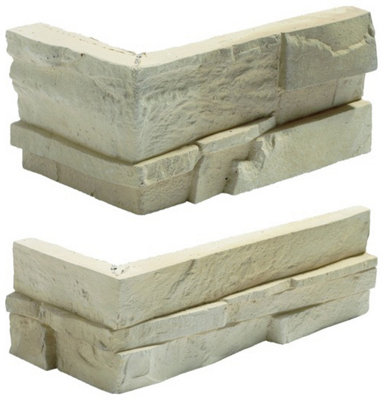
Architectural concrete
Noun
Is concrete that will be permanently exposed to view and therefore requires special care in selection of the concrete materials, forming, placing, and finishing to obtain the desired architectural appearance.
Example: Example: Architectural concrete technology was used in most of the project.
en: Hormigón arquitectónico
Asphaltic concretelisten
Noun
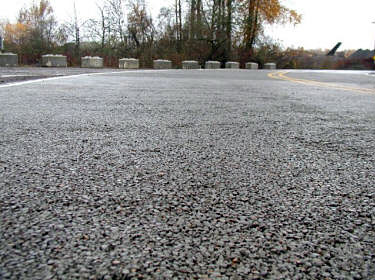
Is a composite material commonly used in construction of roads, highways, airports, parking lots, and many other types of pavement.
Example: Embankments and structural fill, stabilization of soft soils, road subbase and as a mineral filler in asphaltic concrete
en: Concreto asfáltico
Cellular concrete
Noun
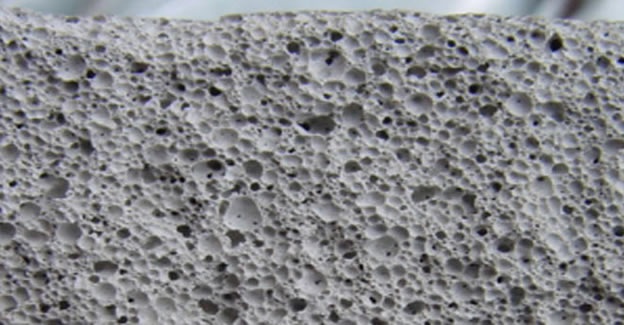
Is a mixture of cement, water, and preformed foam. The purpose of the foam is to supply a mechanism by which a relatively high proportion of stable air voids can be induced into the mixture and produce a cellular or porous solid upon curing of the mixture. When cellular concrete hardens, it has an oven-dry density of 50 lb/ft3 (.8 t/m3)or less.
Example: The company makes wall-building materials such as sand-lime products and cellular concrete products
en: Hormigón celular
Colored concrete
Noun
Decorative concrete, allows traditional grey concrete to be stained and dyed different colors. Concrete has been colored as far back as the early 1900s and was primarily used by companies who made precast structures for building facades.
Example: Wagman manufactures a full line of poly plastic blades for use on colored concrete.
en: Hórmigon colorado
Cured concrete
Noun
Is defined as providing adequate moisture, temperature, and time to allow the concrete to achieve the desired properties for its intended use.
Example: Do not use on architectural concrete or where cured concrete surface color appearance is critical.
en: Hórmigon curado
Exposed concrete
Noun
Refers to concrete whose surface is a visible part of the architectural and interior design of the building. Strictly speaking, this refers to concrete surfaces that were in contact with the formwork shell when they were produced.
Example: The exterior is an exposed concrete wall in harmony with the other buildings that have already been constructed or are planned
en: Concreto expuesto
Green concrete
Noun
Is defined as a concrete which uses waste material as at least one of its components, or its production process does not lead to environmental destruction, or it has high performance and life cycle sustainability.
Insulating concrete form or insulated concrete form (ICF) is a system of formwork for reinforced concrete usually made with a rigid thermal insulation that stays in place as a permanent interior and exterior substrate for walls, floors, and roofs.
Example: High-quality sound absorbing flooring presents a cost-effective supplement to sound-insulating concrete slabs and floating screed.
en: Hormigón aislante
Porous concrete
Noun
Is concrete that is designed to trap water and allow it to percolate through to the ground below.
Example: cutting construction wood, chipboard, Heraklit boards, porous concrete without metal
en: Hormigón poroso
Precast concrete
Noun
Is a construction product produced by casting concrete in a reusable mold or "form" which is then cured in a controlled environment, transported to the construction site and maneuvered into place; examples include precast beams, and wall panels for tilt up construction. In contrast, cast-in-place concrete is poured into site-specific forms and cured on site.
Example: The deck is made of precast concrete segments 4.18 metres thick and weighing approximately 250 tonnes apiece.
en: Concreto prefabricado
Prestressed concrete
Noun
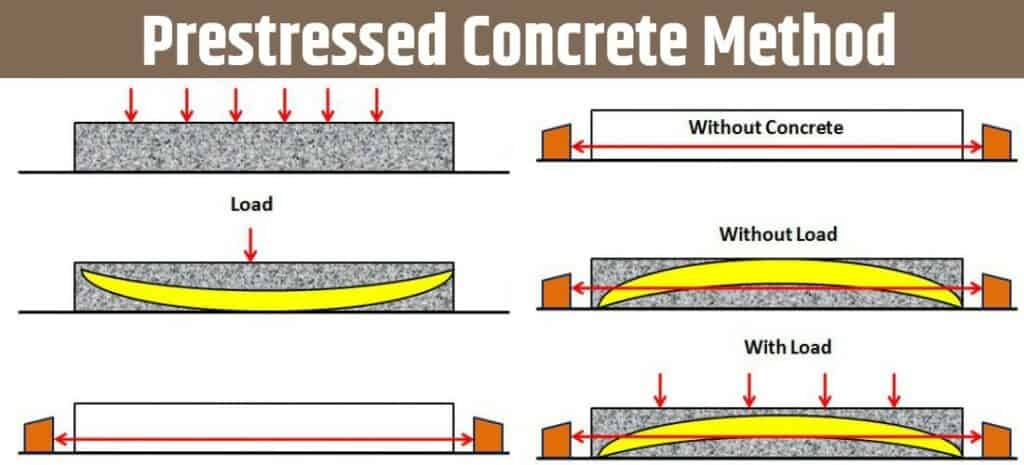
Is a system devised to provide sufficient precompression in the concrete beam by tensioned steel wires, cables, or rods that under working conditions the concrete has no tensile stresses or the tensile stresses are so low that no visible cracking occurs.
Example: This building was made from lightened prestressed concrete and slabs.
en: Hormigón pretensado
Reinforced concrete
Noun
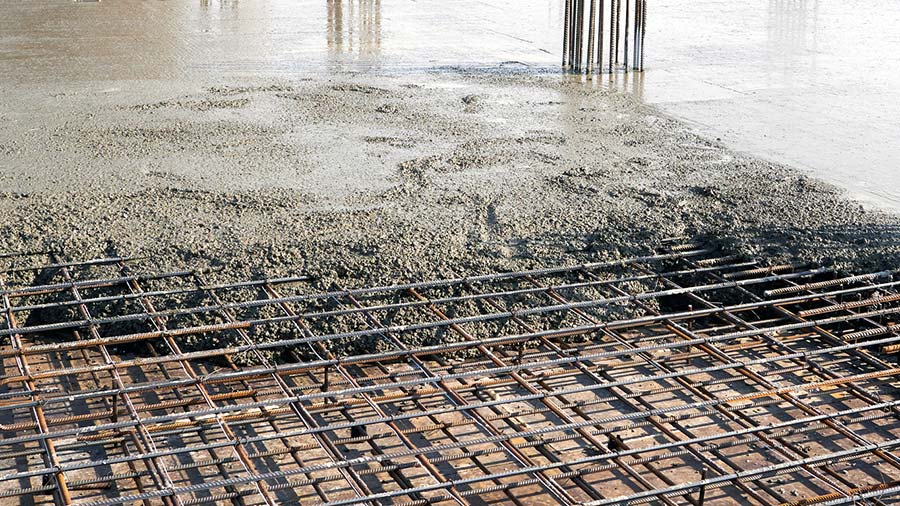
Concrete in which steel is embedded in such a manner that the two materials act together in resisting forces. The reinforcing steel—rods, bars, or mesh—absorbs the tensile, shear, and sometimes the compressive stresses in a concrete structure.
Example: The steel industry competes with reinforced concrete slabs through three basic solutions.
en: Concreto reforzado
Unreinforced concrete
Noun
Concrete without reinforcement or reinforced only for shrinkage or temperature changes.
Example: The floor of the septic box is typically made of unreinforced concrete thick enough to withstand uplift pressure when the tank is empty.